How to Vet a Chinese Tea Supplier: A Buyer’s Checklist
20 October, 2026
Yunnan White Tea Wholesale: The Underrated High-Margin Line
21 October, 2026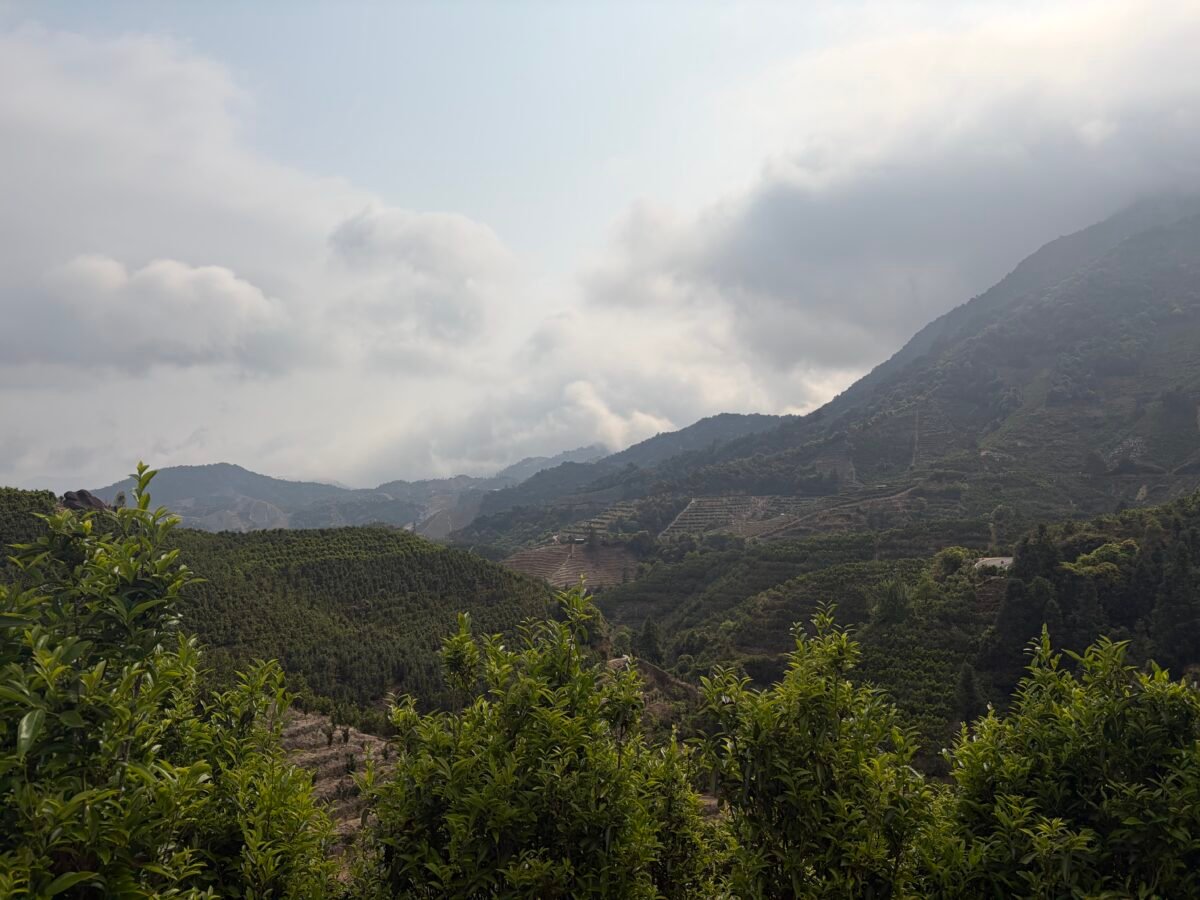
Two lots of Dancong can share the same aroma name — Honey Orchid, Duck Shit, Orchid — and carry wildly different prices. The gap is almost never the name on the tin; it is the ground behind it. Fenghuang Dancong is, above all, a tea of place, and a buyer who understands the Phoenix Mountain’s micro-regions, elevations and soils can read a quote far better than one who shops by aroma alone. This is a working guide to Dancong terroir: where the tea actually grows, why altitude and soil change the cup, and how to talk about it when sourcing.
The Phoenix Mountain Range in One Look
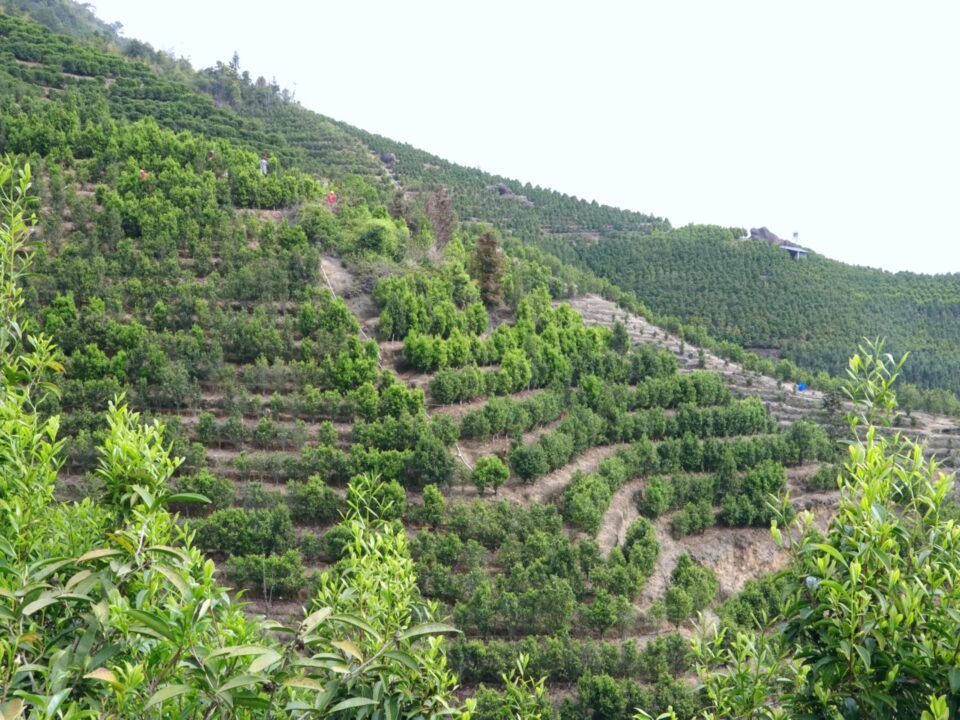
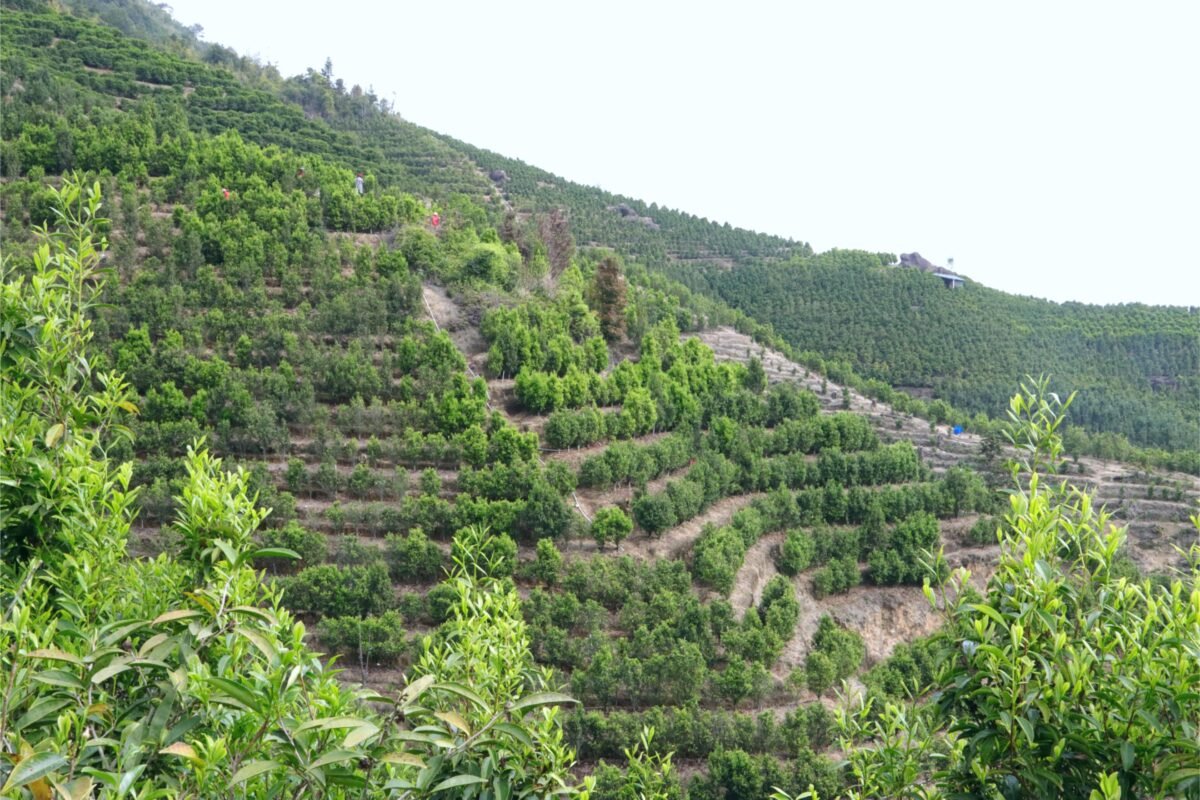
Phoenix (Fenghuang) Mountain is a range, not a single peak, sitting in Chaozhou’s Chao’an district in eastern Guangdong. Its highest summit, Fengniao Ji, reaches about 1,497 metres and is the tallest point in the Chaoshan region. The heart of premium Dancong, though, is a slightly lower peak to its east called Wudong (乌岽), at roughly 1,391 metres, crowned by a volcanic crater lake — Tianchi — near 1,325 metres. Around those heights cluster the villages whose names appear on the most sought-after teas. Tea cultivation across the range spans a broad elevation band from roughly 350 metres up to about 1,500, and that spread is precisely where the quality ladder lives.
The climate across the belt explains a lot of the tea’s character. Chaozhou averages around 21°C with roughly 1,680 millimetres of rain a year; the upper slopes run cooler, wetter and foggier, with the yellow-red soils above about 400 metres running acidic (pH around 4.5 to 6.5) and rich in organic matter. Cool nights, warm days and mineral-rich soil slow the bush down and let flavour compounds build — the same logic that makes high-altitude coffee denser and sweeter.
Wudong and the Village Micro-Regions
If you are buying the top of the range, you are almost always buying from Wudong. The old, high-mountain bushes there grow slowly, are often harvested only once in spring, and develop the savoury, mineral depth locals call “mountain rhyme” (shan yun) — the finish that separates an authentic high-mountain Dancong from low-elevation garden tea. The oldest trees in the area run centuries; the reference point for many buyers is the Wudong village cluster around Liziping, where the legendary “Song Zhong” mother bushes grew.
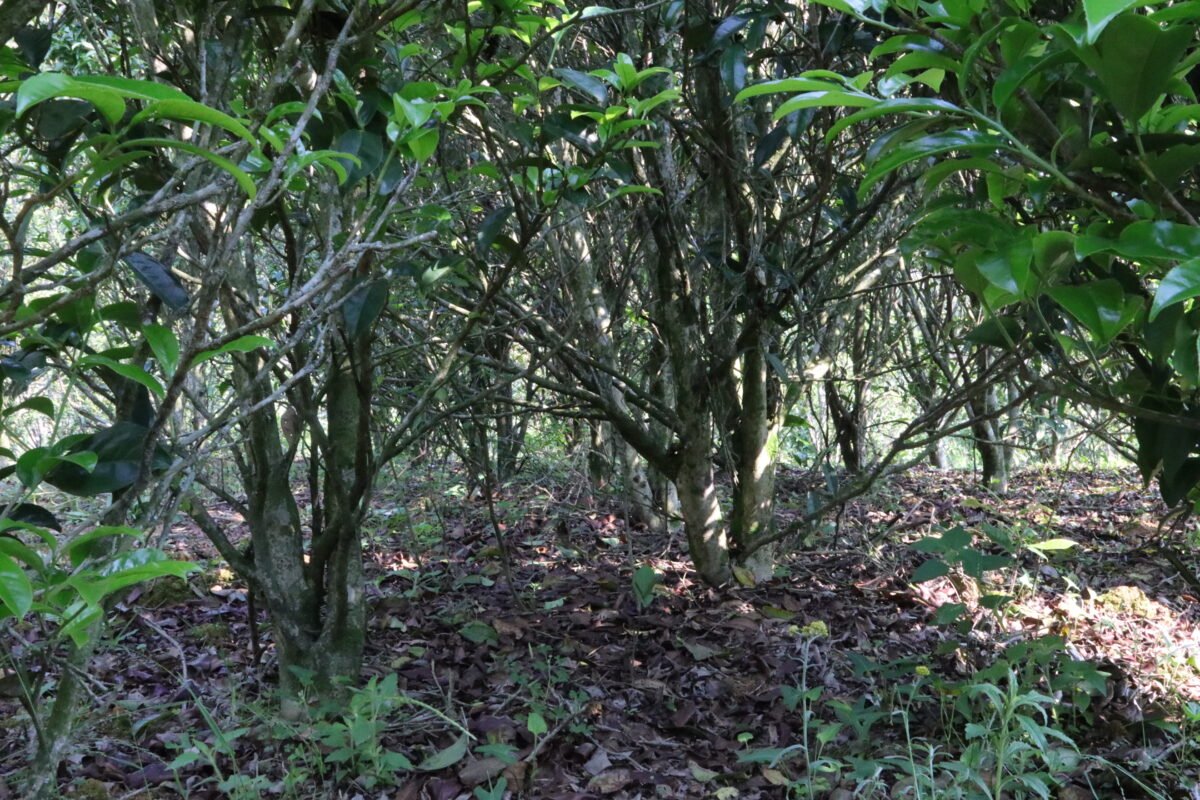
Beyond Wudong, the mountain reads like an old register of named slopes and hamlets. Vendors and specialists map individual bushes to specific villages — Wudong and its hamlets (Liziping, Zhongxin, Hucuo, Shitoujiao), plus Fengxi, Fengbei, Da’an, Shiguping and others — each with its own elevation and microclimate. That place-name detail is exactly what a serious buyer should be able to obtain. A helpful third-party example of this village-level thinking is the Dancong registry maintained by Jing Tea, which cross-references aroma types, bush names and the specific slopes where they originated.
| Zone | Typical elevation | What it means for the cup | Buyer read |
|---|---|---|---|
| Lowland / garden tea | ~350–600 m | Bright aroma, lighter body, faster-growing clones | Entry and blend grades; best value, least depth |
| Mid-mountain villages | ~600–1,000 m | Stronger rhyme, fuller body, more complexity | Solid retail tier; good aroma-to-price balance |
| Wudong high mountain | ~1,000–1,400 m | Deep “mountain rhyme,” thick sweet finish, ageability | Premium / reserve; scarcity drives price |
Ancient Bushes and Why They Command Auction Money
Within Wudong sit the named mother trees that anchor the origin’s mystique. The Song Zhong lineage, traditionally traced to the late Southern Song, produced bushes several centuries old; the most celebrated, near about 1,150 metres in Liziping, was recorded as roughly 600 years old before it died in 2016 and was preserved as a specimen in the local Dancong museum. Others — Baxian at about 1,050 metres, Zhilan and Song Zhong orchid lines higher still, Jilongkan near 830 metres — each contribute the clones that growers propagate and sell under those names. Because an old bush yields only a few kilograms a year at most, genuine old-tree material behaves like an auction commodity: limited, prestigious and non-repeatable in bulk.
For the buyer this creates a practical rule. When a quote is high, ask what justifies it — elevation, village, bush age and single-harvest status. When it is cheap and still labelled “Wudong” or “Song Zhong,” be sceptical, because those names are among the most counterfeited in Chinese tea. The origin’s protected status is meant to police exactly this: Fenghuang Dancong has been a national geographical-indication product since 2010, with the protected area covering some thirty towns, and since 2021 it sits on the China–EU geographical-indications list, a point Guangdong’s own provincial profile of the growing area highlights as key to European market standing.
Aroma, Soil and the Famous Regional Case of Duck Shit
Terroir also explains why the same aroma type tastes different by village. Take the origin’s breakout star, Duck Shit (Yashixiang, “Silver Flower”). Its home and benchmark is the village of Pingkengtou in Fenghuang town at around 900 metres; the highest-attention material comes from Wudong and from villages such as Dongjiao known for roasting skill, while the largest production comes from lower, flatter villages like Xiajiao. Same cultivar, same aroma name — different slope, elevation and hands, different price and cup. This is the essence of Dancong sourcing: you are buying a place as much as a plant.
The cultural weight of the origin is not only commercial. Fenghuang Dancong is inseparable from Chaozhou gongfu tea, the intense small-cup brewing tradition the region invented, and that living craft was recognised internationally — as China’s broader traditional tea-making knowledge was inscribed on UNESCO’s intangible-heritage list. For a Western retailer, that is a genuine, verifiable story to put on a shelf: a tea of named mountains, ancient bushes and a documented brewing culture — not a generic “Chinese oolong.” The region’s broader role in the global tea trade is reflected in the tea-industry coverage of Chaozhou by China Daily.
How to Buy Terroir, Not Just a Name
Turn the geography into purchasing discipline with a short list of asks. Request the village or micro-region and the rough elevation band, and expect the answer to be consistent with the price. Ask whether the lot is single-harvest (spring commands the premium) or a blended garden tea. Ask for the bush lineage if it is sold as an old-tree or named-mother-bush tea, and remember that genuine ancient-tree material cannot be a large standing order. Then anchor everything to a sealed reference sample, and let the mountain rhyme — the cool, mineral, lingering finish that lowland tea imitates poorly — be your proof in the cup.
That ladder maps neatly onto a product range. A balanced Dancong line opens with mid-mountain aromas like our Phoenix Single Bush Dancong (Zhilan / orchid), sits inside our wider Dancong oolong wholesale range, and reserves a small, rotating high-mountain or old-tree lot for premium retail — exactly the structure we unpack in our Phoenix Mountain terroir overview. When you want to confirm a specific slope, elevation or harvest for your programme, ask our team for the lot details and match them to the mountain logic above.
Season on the Mountain: Spring, Autumn and Snowflake
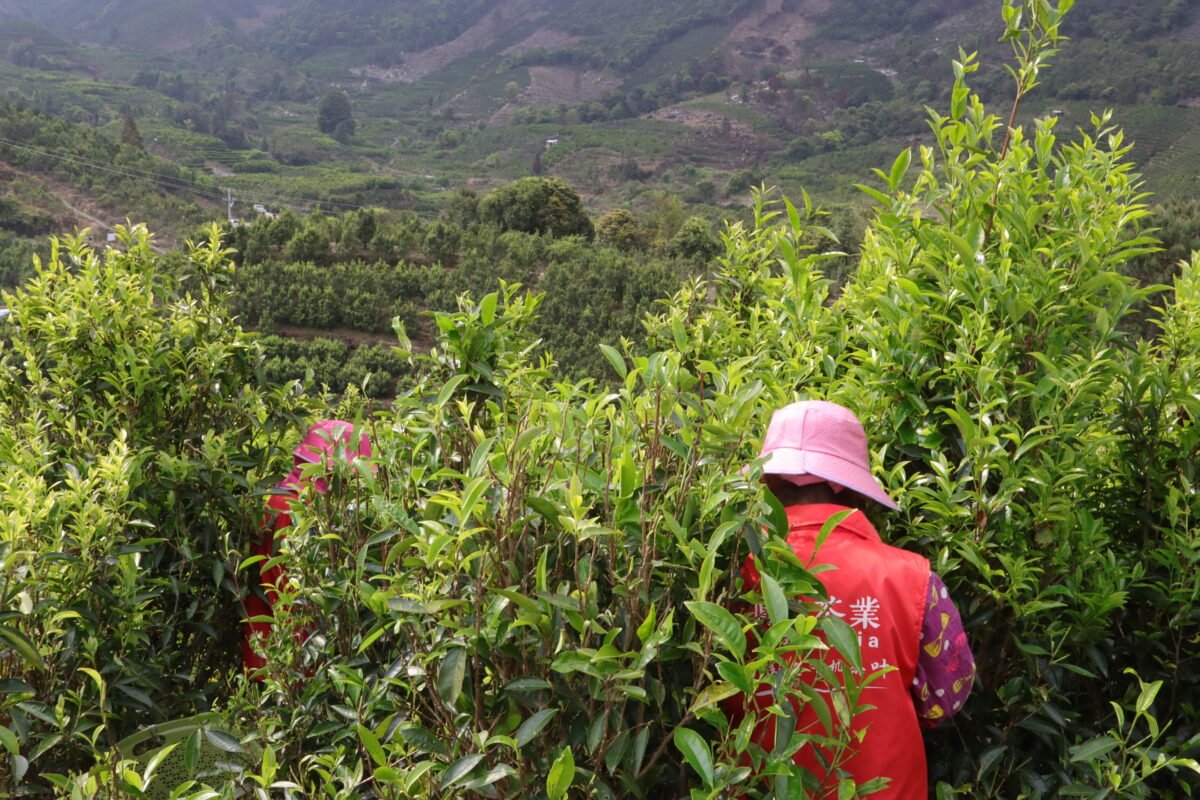
Terroir sets the ceiling; season sets availability and character within it. Spring Dancong, picked in the cooler weeks before the heat, is the most prized — the bush has banked nutrients over winter, and the slow first flush concentrates aroma and that mineral finish buyers chase. The GI standard itself closes spring plucking around mid-May and shifts the plant’s energy into later growth. Autumn picks, especially the late, high-elevation “snowflake” (Xu Pian) flush from the coldest, mistiest part of the year, are famous for a heady, high, assertive aroma — flashier and less layered than a fine spring lot, and usually more affordable. Summer material is the thinnest and cheapest, and is where a lot of bulk garden tea lives.
For a sourcing calendar this is actionable: if you want depth and the benchmark quality of a named village, plan to buy the spring flush early, because the best high-mountain lots sell through fast and cannot be reordered at will. If you want an aromatic, good-value tea for everyday retail or iced formats, autumn and snowflake lots are the smarter use of budget. The point is that “Dancong” is not one purchase decision but two — where on the mountain, and in which season — and pricing should be read against both.
Key Takeaways
- Dancong value is driven by place: elevation, village and bush age matter more than the aroma name alone.
- Wudong (about 1,391 m) is the premium core; “mountain rhyme” is the sensory proof of high-grown origin.
- The same aroma tastes different by village — benchmark Duck Shit is Pingkengtou/Wudong, bulk is lower ground.
- Old named mother bushes (Song Zhong, Baxian and kin) are scarce and non-repeatable; treat them as limited drops.
- Buy the geography on paper: village, elevation, single-harvest and bush lineage, verified against a sealed sample.