Yunnan Dian Hong Black Tea Wholesale: A B2B Buyer’s Guide
19 October, 2026
How to Vet a Chinese Tea Supplier: A Buyer’s Checklist
20 October, 2026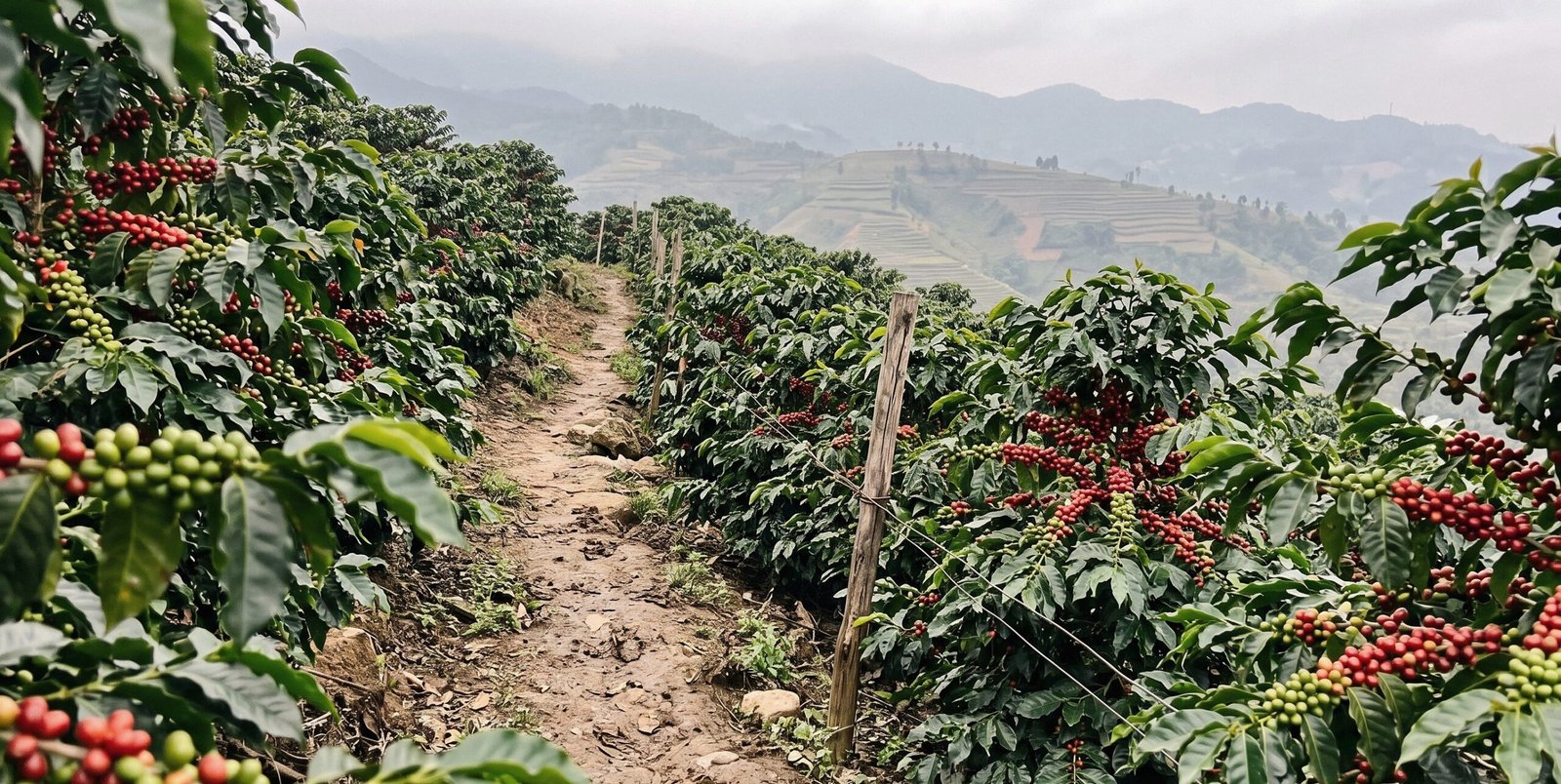
For most of a decade, Yunnan was the interesting footnote of the Chinese beverage world — the place that grew 95% of the country’s coffee, largely sold on as cheap material for instant. That footnote has become a headline. A brutal 2024–2025 price cycle pushed global arabica to a 47-year high, and for the first time importers and roasters started asking a serious question about China: is Yunnan coffee now a real origin worth carrying, not just a gap-filler? The answer for a B2B buyer is a qualified yes — Yunnan arabica has genuine quality upside and a supply story, but it is a different product from a Latin American or Ethiopian origin and needs to be bought, graded and positioned accordingly. This guide is written for roasters, beverage brands and private-label buyers who want to evaluate it properly.
Why Yunnan Coffee Now Earns a Place in the Range
The timing is what makes Yunnan newly relevant. International Coffee Organization data show the price index climbing sharply through late 2024 into 2025, and by February 2025 US ICE arabica futures had broken 430 US cents per pound — a 47-year high — as drought and rain damage in Brazil and Vietnam tightened global stocks, according to reporting on the record futures price. When the benchmark for commodity origins spikes, buyers look for alternative supply, and a rising-quality origin with domestic-logistics convenience suddenly gets attention. For a roaster fighting per-kilo cost, that matters more than romance.
Yunnan is not a micro-curiosity. The province accounts for effectively all of China’s commercial coffee — roughly 95% of national output from some 76,000-plus hectares of planting — and sits at the northern fringe of the world’s tropical “bean belt.” Chinese domestic coffee consumption has grown dramatically over the past decade, which means there is now a serious local market pulling premium Yunnan beans off the export chain, and global brands including Starbucks and Luckin have moved to source Yunnan directly. That combination — limited incremental supply, a quality transformation, and a hungry domestic market — is exactly the setup that turns an origin from cheap filler into a line worth positioning deliberately.
You can see the shift in the farm-gate number alone: Yunnan grade-one green coffee that traded around ¥32 per kilogram in early 2024 had climbed toward ¥60 within a year — nearly doubling, mirroring the global rally but also reflecting a genuine upgrade in how the coffee is processed and graded. International Coffee Organization market data provide the wider context for why every origin repriced at once; the Yunnan story is that its premium is now partly self-earned, not just imported from the futures board.
Where It Grows: Origins Inside Yunnan
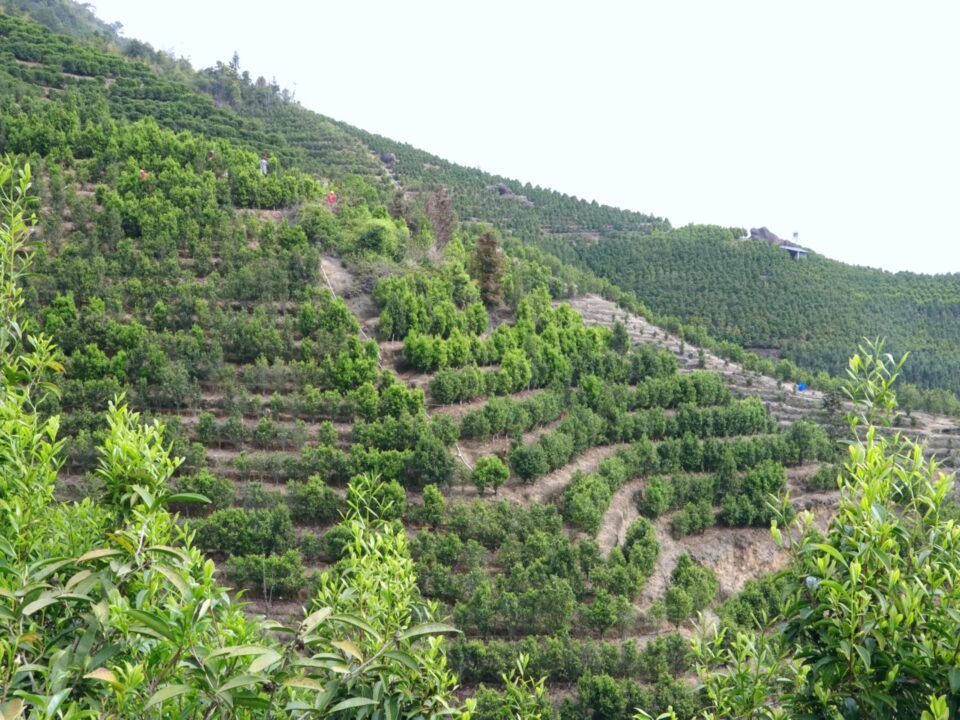
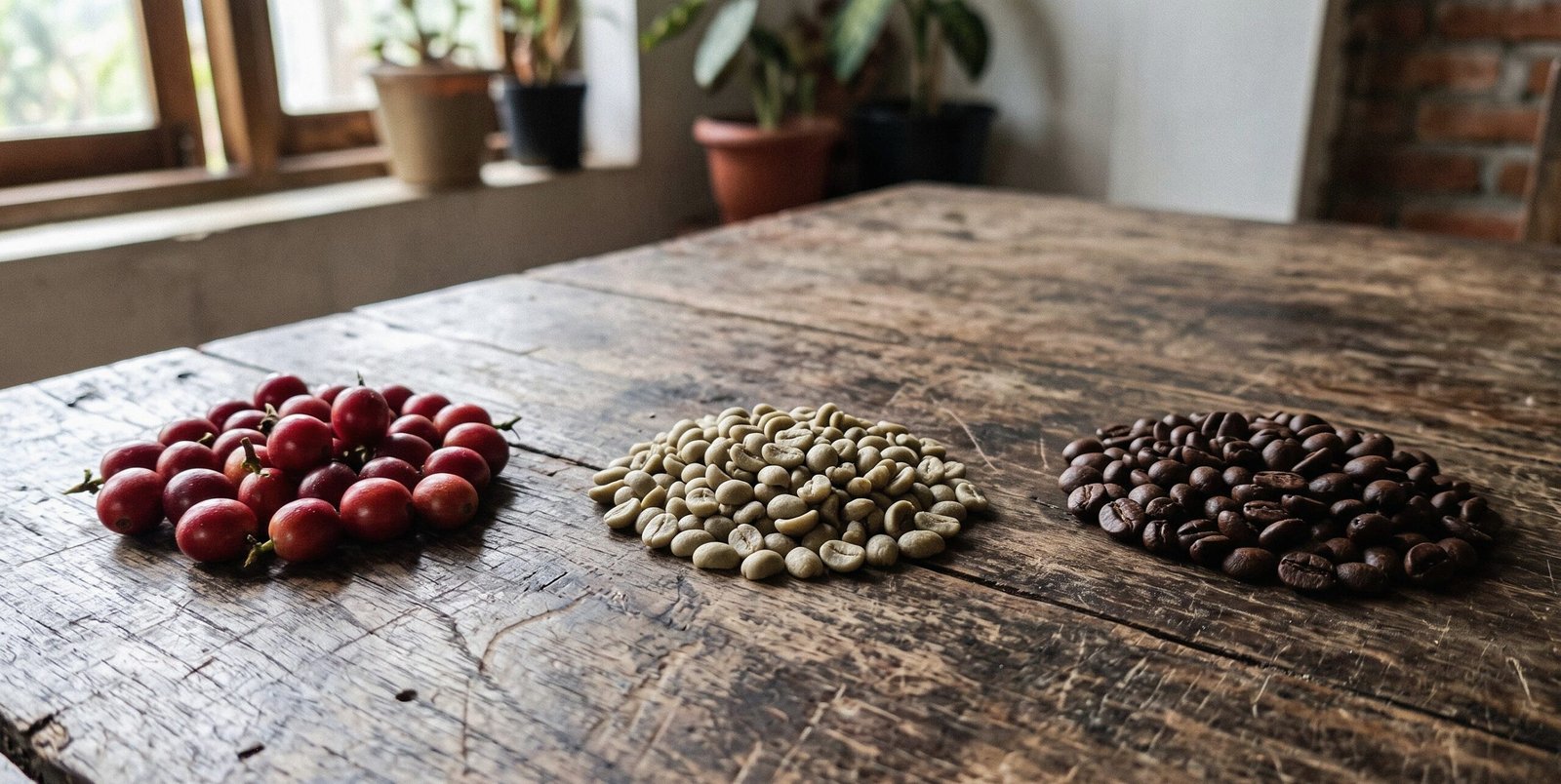
Coffee in Yunnan concentrates in the southwest of the province, in prefectures such as Pu’er, Baoshan, Lincang and Dehong, mostly between roughly 900 and 1,600 metres on mountain slopes. Elevation this high for a subtropical latitude gives a slower ripening cherry and — processed well — a denser, sweeter cup than low-grown material. The two prefectures you will hear named most are Pu’er and Baoshan; within them, micro-areas and co-operatives increasingly drive quality reputations the way single hills do in wine.
| Yunnan coffee at a glance | What a buyer should know |
|---|---|
| Share of China output | ~95% — Yunnan is effectively China’s coffee origin |
| Main prefectures | Pu’er, Baoshan, Lincang, Dehong (south-west highlands) |
| Elevation band | ~900–1,600 m; higher lots drive the specialty tier |
| Dominant varietal | Arabica, largely Catimor, with newer quality plantings |
| Harvest window | Roughly November to February/March (a Northern-Hemisphere-winter crop) |
| Export footprint | Shipped to dozens of countries; Europe and Asia lead demand |
One practical consequence of that harvest window deserves emphasis: Yunnan’s crop arrives in the opposite season to much of Latin America and lines up with the end of Central American harvests. For a roaster that buys year-round, this can smooth supply gaps — but it also means a Yunnan lot is a defined annual purchase, not a standing commodity you can top up anytime. Plan it as a seasonal commitment. The reach is already broad: in 2025 Yunnan coffee shipped to 43 countries and regions, with Europe and Asia the leading destinations and Vietnam and Malaysia the biggest Asian buyers, according to Xinhua’s reporting on Yunnan’s coffee trade.
Varietal and the Catimor Question
Much of Yunnan is planted to Catimor, an arabica family bred for disease resistance and reliable yields in humid conditions. Catimor has a reputation among specialty purists as less aromatic than heritage typica/bourbon genetics, and that stereotype partly shaped Yunnan coffee’s early low-price image. The honest modern picture is more nuanced: with careful site selection, ripeness sorting and better processing, Catimor grown at altitude can produce a clean, sweet, well-balanced cup, and Yunnan producers have invested heavily in exactly that. Judge your samples on the cup and the defect count, not on the varietal label — a well-run Catimor natural can outperform a sloppy Geisha on value.
That said, the varietal does set expectations. Yunnan is generally not the origin to chase explosive, wine-like fruit bombs. Its most reliable profile is a medium-bodied, low-acidity, chocolate-and-nut cup with a rounded sweetness and sometimes a herbal or spicy edge — a natural fit for espresso, milk drinks and blend components, which is precisely where Western and Asian demand is strongest.
Processing Methods and the Cup They Produce
How the cherry is turned into green coffee is the single biggest lever on a Yunnan cup, and the origin’s quality upgrade has come largely from processing, not genetics. Three methods dominate the market.
| Processing | Cup tendency | Best for | Watch for |
|---|---|---|---|
| Washed | Clean, bright, consistent | Filter, blends needing clarity | Under/water-stressed fermentation = hollow flavour |
| Natural (dry) | Fruitier, heavier body, sweeter | Espresso, sweet-forward profiles | Over-ferment, mould if drying is rushed |
| Honey / pulped-natural | Balanced sweetness + clarity | Versatile, milk drinks | Inconsistent mucilage drying |
When you request samples, ask specifically for the process and the drying method (patio, raised bed or mechanical), because a mechanical-dried natural at the wrong temperature is the classic cause of a muddy, smoky defect that ruins an otherwise decent lot. The same farm can produce excellent washed and mediocre natural in one season depending on weather and drying discipline — so grade by the actual samples, per process.
Buying Green vs Buying Roasted
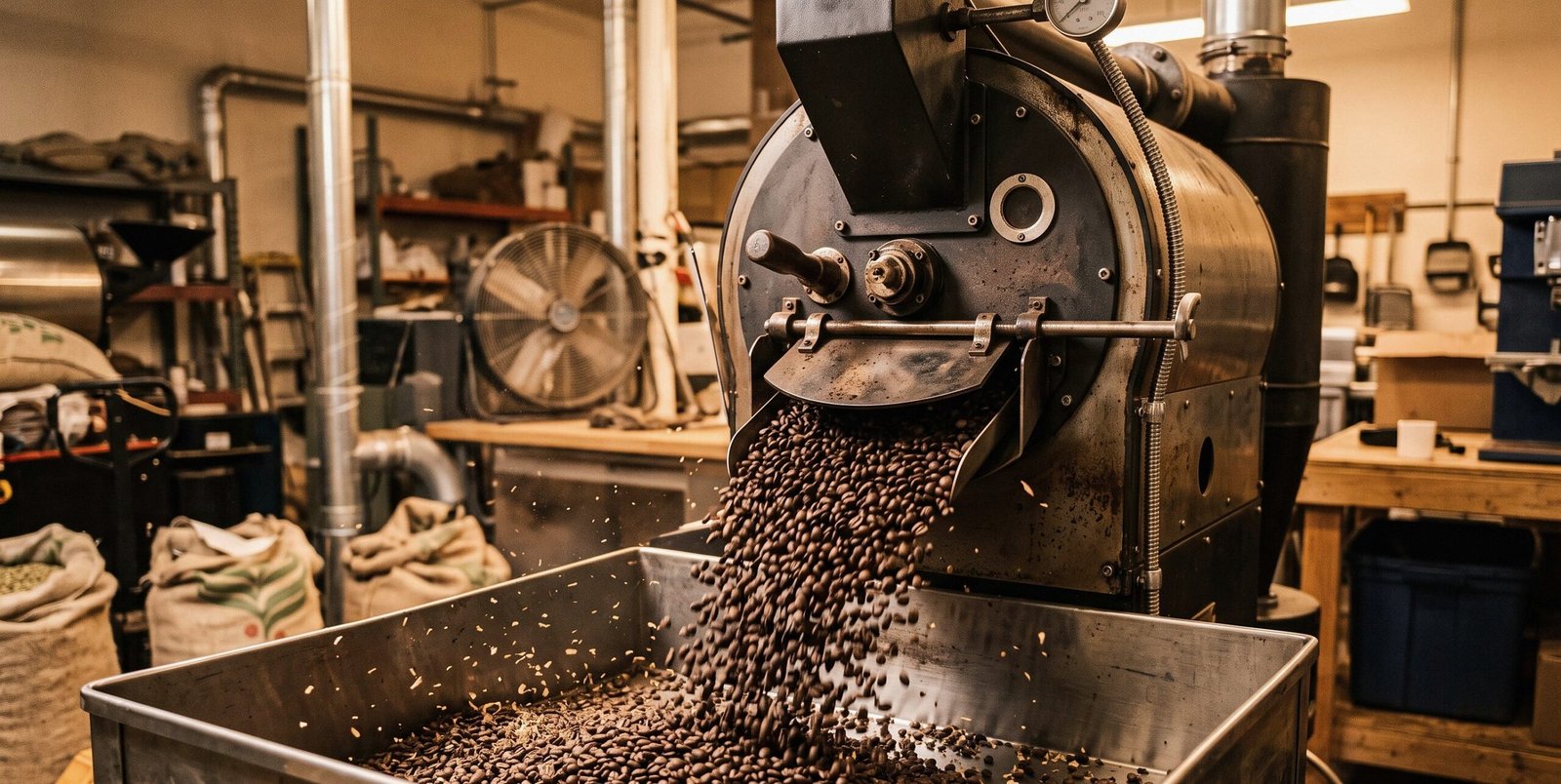
The first fork in the road is whether to import green (unroasted) coffee or buy roasted product. If you are a roaster or you run your own roasting, green is the right call: it gives you control of roast profile, better per-kilo economics, and the ability to blend Yunnan with other origins. You will need to manage moisture (aim roughly 10–12%), cup incoming lots on arrival, and store green properly, because unroasted coffee degrades over months, especially in humid transit.
If you do not roast — a café chain, a retail brand, a gifting or private-label operation buying finished product — then roasted, whole-bean or ground, delivered ready to pack is simpler and lets you build a branded SKU without roasting capital. Many Yunnan-origin suppliers and Chinese exporters now offer both, plus private-label roasting and packaging. Decide which layer of the value chain you are buying at before you ask for prices; comparing a green quote against a roasted quote is meaningless, and suppliers will happily quote you whichever you ask for.
Grading, Defects and Cupping
Whatever the varietal or process, commercial green coffee is traded on a defects-and-cup basis, and this is where buyers get burned. A lot’s value depends on screen size, moisture and the count of primary and secondary defects (insect damage, black beans, husk fragments), plus a clean cup without faults like ferment, mould or earthiness. Specify all four: screen, moisture, maximum defect count and a target sensory profile, and evaluate every sample by cupping, not by photo.
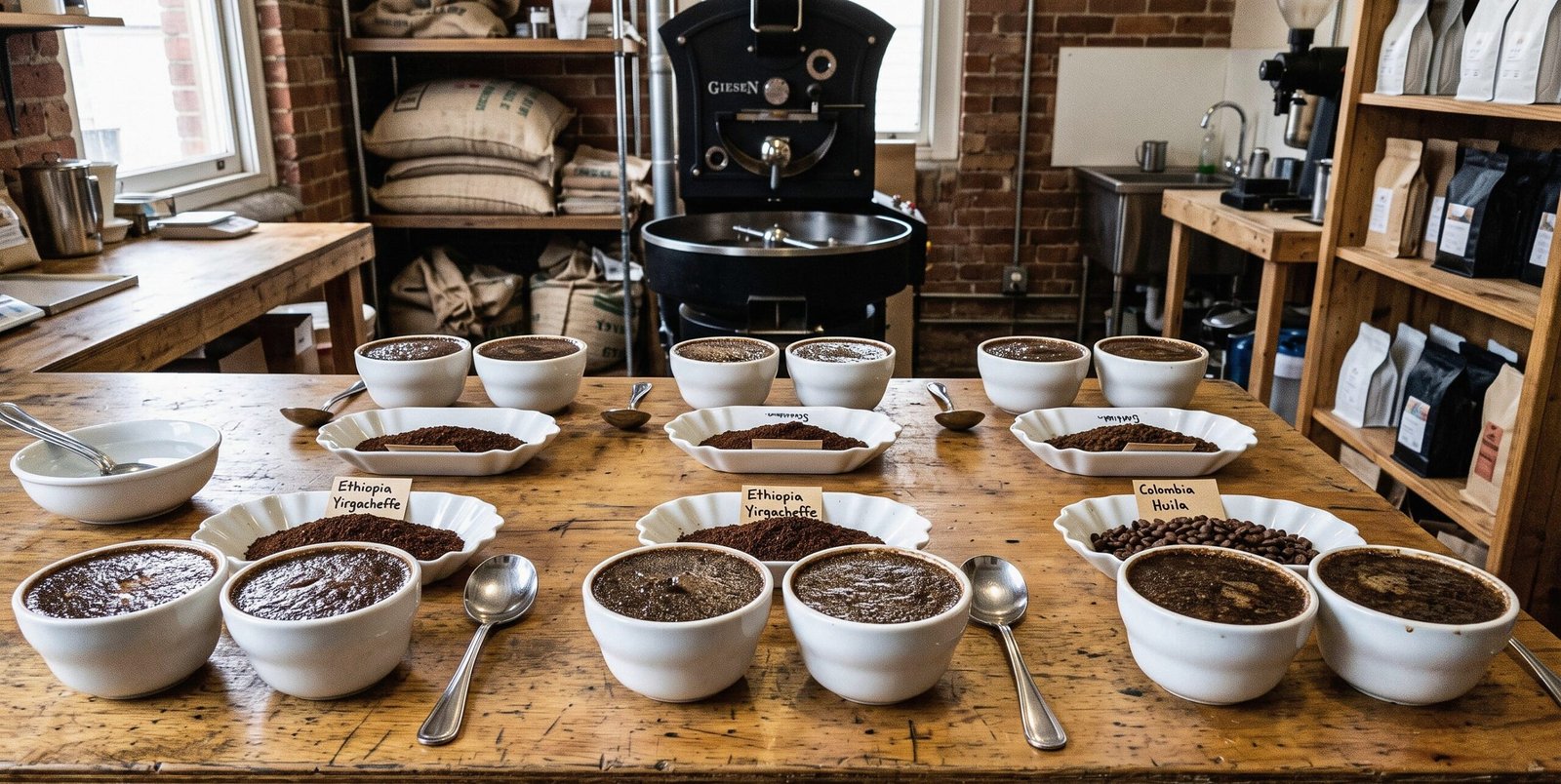
Ask suppliers to cup against you and to quote against an agreed sample ID you both keep. For specialty-tier purchases, request a scoring reference (a Q-grader cup score) where the lot has one, and be willing to pay a premium for lots under about 12% moisture with low defect counts — those are the ones that will still taste good three months after arrival. A buyer who treats green coffee like an agricultural commodity with tolerances, rather than a fungible bag, buys far more consistently from Yunnan.
What It Costs and Managing Volatility
Green coffee is priced off a futures board plus a differential for origin, quality and service, so your landed cost moves with the market whether or not you are paying attention. The 2024–2025 cycle proved how fast that differential can run. The practical defence is structure, not heroics: lock a base volume on a forward contract with an agreed premium over the reference price, keep a smaller spot allocation to chase quality lots when they surface, and pay the extra for a clean, low-defect specialty grade when the cup justifies it rather than defaulting to the cheapest grade. A short contract, transparent pricing formula and realistic volume beats a big opportunistic order you cannot store well.
Two forces are tightening Yunnan supply specifically, and both argue for committing early rather than waiting for a dip. Global demand keeps climbing — industry reporting on China’s coffee market points to domestic consumption roughly multiplying several-fold over the past decade — and a fast-growing Chinese café scene now competes for the same domestic Yunnan crop that exporters once bought cheaply. Add the near-doubling of the farm-gate price for grade-one green, and the easy conclusion for a buyer is that Yunnan is repricing toward a real origin, not staying a bargain. Buy the quality you want on a defined contract this season; do not assume next season’s price or availability will look like last year’s.
Compliance: Traceability, EUDR and Documents
Two regulatory currents matter for coffee buyers now. The first is traceability. The EU Deforestation Regulation requires operators placing coffee (and other commodities) on the European market to prove the land was not deforested after a cutoff date — which pushes real geolocation data down the supply chain from December 2026. This rewards traceable, parcel-level sourcing and penalises anonymous bulk blending. Second is the ordinary import file: commercial invoice, packing list, phytosanitary certificate, bill of lading, and for organic claims a valid certificate and transaction documents. If you sell into the EU or the US, build these into your purchase terms with the supplier rather than chasing them after the container ships.
Organic and sustainability certification is a growing part of the Yunnan story too, and it is a genuine selling asset given the smallholder, shade-and-terraced nature of much of the province’s coffee. Decide early which claims you need — organic, Rainforest Alliance, fair trade, or simply documented direct sourcing — and confirm the paperwork exists per lot, because a certificate that cannot be tied to your specific shipment is worth nothing at your customs broker’s desk. Build the file once, per supplier, and reuse the template each harvest rather than reinventing it under deadline pressure.
Where Yunnan Coffee Sells Best
Yunnan’s rounded, low-acid, chocolate-and-nut profile slots cleanly into a few commercial lanes. It is a natural espresso and milk-drink component, where its sweetness and body carry through milk and where bright African acidity would clash. It works as a cost-smart filler or base in breakfast and house blends, letting a roaster hold price when the board is high. It suits ready-to-drink and bottled-coffee producers who need a consistent, sweet, low-acid cup that survives processing. And in gifting and private-label, a named Chinese origin is a differentiator — a Yunnan lot tells a story no one else’s blend does.
Our own roasted range reflects those lanes: the Yunnan Small-Grain Coffee is a straightforward origin coffee for retail and brewing, and the Classic Full-Body blend is built for espresso and milk drinks where body and crema matter. Browse the wider Yunnan coffee range for available formats, and if you want to evaluate green or roasted Yunnan coffee against your own spec, talk to our sourcing team about samples and volume tiers.
Building a Direct-Trade Relationship
Because Yunnan is still rebuilding its reputation as a quality origin, some of the best lots never reach an auction or an export catalogue — they are bought directly by roasters who show up, taste on the farm or in the dry mill, and commit before the harvest is fully processed. For a buyer willing to invest the relationship, direct sourcing gives you three things the spot market cannot: first access to the best processing runs of the season, a transparent price that your growers actually understand, and traceability to a specific co-operative or estate, which increasingly is exactly what the EUDR file and a marketing story both demand.
The mechanics are simpler than they sound. Work through a reliable exporter or an origin partner who can aggregate smallholder lots, agree quality targets and a farm-gate premium in advance, and pay a genuine premium for the cherries that are picked at full ripeness and delivered for careful processing — the behaviour you want, rewarded directly. Roasters who do this report more consistent cups and a supply story they can tell with numbers. If you do not have boots on the ground, the practical middle path is to build a multi-year relationship with one or two Yunnan-focused exporters, cup their seasonal lots, and steadily shift volume toward whoever keeps delivering a clean, sweet cup.
Landed Cost: It Is Never Just the Board Price
New coffee importers anchor on the futures number and then get surprised by everything stacked on top of it. A Yunnan green coffee purchase is priced on the board plus an origin differential, but your true landed cost adds ocean freight, insurance, port and customs handling, inland trucking and, critically, proper packaging and storage. Green coffee ships in jute bags, or better in grain-pro inside jute, typically in 60- or 69-kilogram units, and to a buyer in a humid climate the inner moisture-barrier liner is the difference between a coffee that cups well on arrival and one that has gone flat or picked up taint in transit.
Model the full chain before you compare two quotes: FOB versus CFR versus delivered, the number of days your stock will sit before roasting, and your warehousing conditions. A marginally lower per-kilo coffee that arrives at 13% moisture or with an unsealed bag is more expensive in practice than a slightly higher one delivered dry and protected. Freight volatility in 2024–2025 made this lesson unavoidable — the ocean leg can move the landed number as much as a swing on the board, so quote and plan on landed cost, not farm-gate.
From Sample to Container: Protecting the Cup
Coffee is an agricultural product with a short shelf life in green form, so quality control does not end at the sample approval. Keep a sealed reference sample of the exact lot you cupped and approved, and on container arrival cup again and re-check moisture and defect counts against that reference before releasing payment. This is where most complaints are actually caught: a container that matches the paperwork but drifted from the sample — a wetter lot, more fannings, a fermentation note that crept in on the drying floor.
Two habits protect you. First, insist the supplier ships against the same lot and process they sent you, with the parcel identity (co-operative, dry mill, harvest date) recorded — the traceability data you need for both compliance and, frankly, for calling out a substitution. Second, rotate stock on a first-in-first-out basis and roast older green sooner; even well-stored Yunnan arabica peaks within the first several months and slowly loses the sweetness you paid for. Buy in line with how fast you actually roast, not in line with a good price on a huge lot you will be defending a year later.
A Buyer’s Glossary of Coffee Terms
Quick reference for the vocabulary that appears on green-coffee quotes and purchase orders.
- Green coffee — unroasted, milled beans; the form coffee is traded and imported in.
- Catimor — the disease-resistant arabica family dominant in Yunnan; reliable, medium-bodied.
- Screen size — bean size graded through perforated screens; larger, even screens command more.
- Defects — counted faults (black/frozen/insect-damaged beans); primary defects hurt a grade more than secondary ones.
- Moisture content — ideally ~10–12% in green; too high risks mould, too low speeds staling.
- Washed / Natural / Honey — the three main processing routes: fully washed clean, dry-in-fruit fruity, or in-between pulped-natural.
- Cupping — standardised brewing-and-tasting protocol used to grade and compare lots.
- Q grade — specialty-tier quality judged by certified Q graders, often expressed as a 0–100 score.
- Differential / basis — the premium or discount over the futures reference price used to settle a contract.
- EUDR — the EU Deforestation Regulation requiring geolocated, traceable supply for coffee placed on the EU market.
Yunnan coffee has crossed from cheap substitute to an origin worth an honest look, and the buyers who do best with it treat it as what it is: a high-grown, low-acidity arabica with a processing-driven quality ceiling, sold against a volatile futures board and, increasingly, a traceability rulebook. Get the green-versus-roasted decision right, spec defects and moisture like an agricultural product, lock pricing structure rather than chasing spot, and Yunnan earns a durable place in the range — as a distinct Chinese origin, not a discount on someone else’s. The roasters who started treating it as a real origin two seasons ago are, predictably, the ones least exposed to whatever the board does next.