一杯の中国茶の美しさ
2026年10月15日
Dancong vs Tieguanyin: Which Oolong Fits Your Product Line?
10月 16, 2026
If you source tea for a living, you have probably watched oolong move from a quiet corner of the catalogue to the front of the shelf. Much of that shift traces back to one hill mass in eastern Guangdong: the Phoenix Mountains, home of Fenghuang Dancong (also written Fenghuang Dancong, Phoenix Dancong or 凤凰单丛). Buyers ask us the same questions every week — what separates a good Dancong lot from a mediocre one, which aroma types actually move in their market, and how to talk to a Chinese supplier so the sample and the container taste the same. This guide answers those as a working introduction for wholesale and OEM purchasing, not as a tasting blog.
Dancong is a semi-oxidised oolong, sitting between green and black tea on the oxidation spectrum, and it carries a reputation in China as the “perfume among teas.” That reputation is the commercial hook: a single origin that can justify premium shelf pricing, gifting lines and private-label ranges. But the same characteristics that make it attractive — dozens of named aroma types, altitude tiers, roast levels and a strict geographical-indication boundary — also make it easy to mis-spec and overpay for. This article walks through all of it from a buyer’s seat.
What Fenghuang Dancong Actually Is
Dancong literally means “single bush” or “single丛.” Historically the name described a method: select an exceptional individual tea bush, pick it separately, process it separately and sell it under its own name. That produced “one tree, one aroma,” with each named bush expressing a distinct scent and flavour. Over time the term broadened. Today Fenghuang Dancong refers to a category of strip-rolled oolong grown and processed within the defined Phoenix Mountain area from Phoenix Shui Xian cultivar stock, with individual lots grouped by their dominant aroma.
For a buyer, two consequences matter more than the poetry. First, Dancong is cultivar- and origin-defined, not just style-defined, so the growing area and the plant variety are part of what you are paying for. Second, the category is graded by aroma type and by altitude, which is where real price differences live. If a supplier cannot tell you the aroma type, the rough elevation band and the harvest (spring, autumn, or the low-priced winter “snowflake”), the quote is incomplete.
The Origin Story You Can Put on Your Label
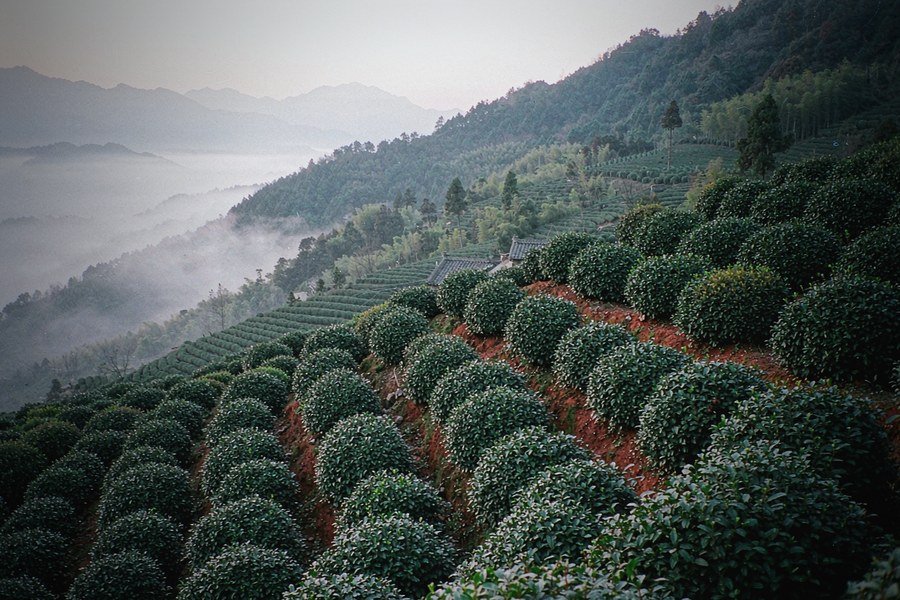
Authenticity is a sellable asset in Western specialty retail, and Dancong’s authenticity is well documented rather than invented. Cultivation on Phoenix Mountain is traditionally traced to the late Southern Song, giving the tea close to a thousand years of history; it served as tribute tea in the Ming, and the separate-bush processing method was formalised during the Qing. In 2010 China’s former quality regulator approved Fenghuang Dancong (枞) tea as a national geographical-indication (GI) protected product, with the protected area spanning roughly 30 towns across Chao’an, Raoping and Xiangqiao districts of Chaozhou. A decade later, in 2021, it was on the first batch of the China–EU geographical-indications agreement — a meaningful detail for European importers, because it gives the name standing inside the EU market.
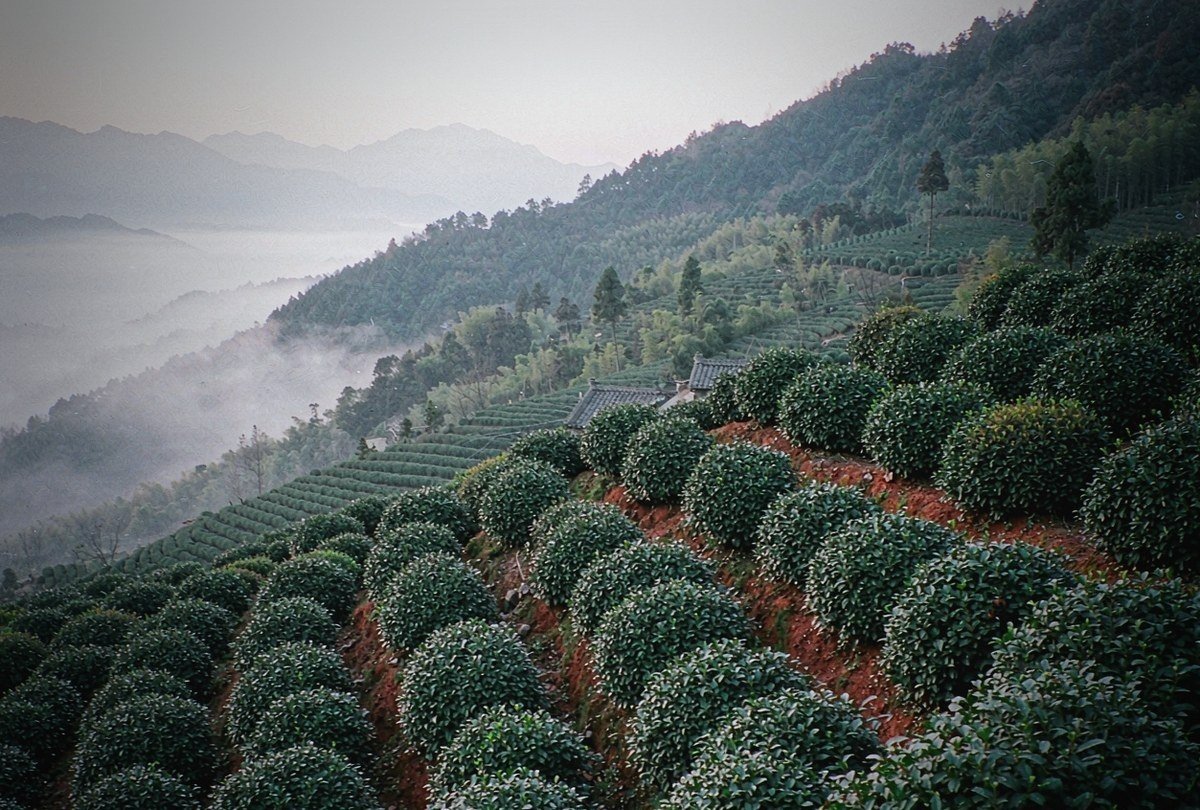
Scale has grown alongside the name. The core producing township of Fenghuang alone reported close to 5,867 hectares of tea plantations and about 9,167 tonnes of dried raw tea a year, supporting some 35,000 people in the trade, according to Guangdong’s provincial profile of the Fenghuang Dancong growing area. Across Chaozhou the industry reached roughly 29.7万亩 (about 19,800 hectares), 3.98万吨 of dry tea and output value above ¥9.5 billion by the end of 2025, with the regional brand ranking near the top of China’s tea-brand influence indices. Chaozhou exports of Dancong and related tea totalled about 954 tonnes worth roughly ¥448 million across 2022–2025 — small in tonnage, but a premium slice that has been climbing.
One fact carries more pricing weight than any marketing line: within the origin sit an estimated 15,000 tea trees older than a century, thousands older than 200 years, and a handful of ancient “mother trees” — including a single tree officially recognised at national heritage status near Liziping in Wudong village. Tea from these old, high-altitude bushes is scarce, and it is where the auction-grade money concentrates. Everything below it on the altitude ladder is a different price conversation. The registration and technical rules that define the protected product are summarised in the geographical-indication file for Phoenix Dancong tea.
Fenghuang Dancong at a Glance
| Attribute | What a buyer should know |
|---|---|
| Category | Semi-oxidised oolong (strip-rolled), Guangdong |
| Origin boundary | GI-protected area, ~30 towns across Chao’an / Raoping / Xiangqiao, Chaozhou |
| Cultivar base | Phoenix Shui Xian stock (registered clone GSCT17), many named aroma types |
| Elevation range | ~350–1,560 m; core quality and pricing concentrate at higher elevations |
| Core township output | ~5,867 ha, ~9,167 t dry raw tea a year (Fenghuang town, recent figures) |
| Ancient trees | ~15,000 over 100 years; scarce old-bush lots drive the top price tier |
| Protective status | National GI since 2010; on first batch of China–EU GI agreement (2021) |
The Aroma Types You Will Actually Buy
Dancong’s fame rests on its aromatic range. A 1996 university survey standardised the classic set into ten named aroma types, and within them sit 80-plus cultivar lines. You do not need all of them — successful wholesale programmes usually lead with two or three that consumers recognise and repeat-buy.
- Honey Orchid (Mi Lan Xiang) — honey sweetness, a roasted-sweet-potato undertone, mellow and forgiving. The volume workhorse and the easiest entry point for a new range. See our Honey Orchid Dancong single bush.
- Duck Shit (Ya Shi Xiang / “Silver Flower”) — the internet-era breakout. Despite the notorious name (the cultivar was renamed Silver Flower in 2014), it delivers an intense honeysuckle-and-cream aroma with fast sweet return, and it is the single strongest pull in young-drink and milk-tea channels. Our Duck Shit (Yashixiang) Dancong is built around this profile.
- Orchid (Zhi Lan Xiang) — refined floral, softer body, favoured by experienced drinkers and a natural fit for premium single-origin retail. Our Orchid Aroma Phoenix Dancong sits here.
- Gardenia / Yellow Sprig (Huang Zhi Xiang), Almond (Xing Ren Xiang), Osmanthus (Gui Hua Xiang), Ginger Flower (Jiang Hua Xiang) — the specialty layer. Lower volume, higher story, excellent for limited releases and tasting flights.
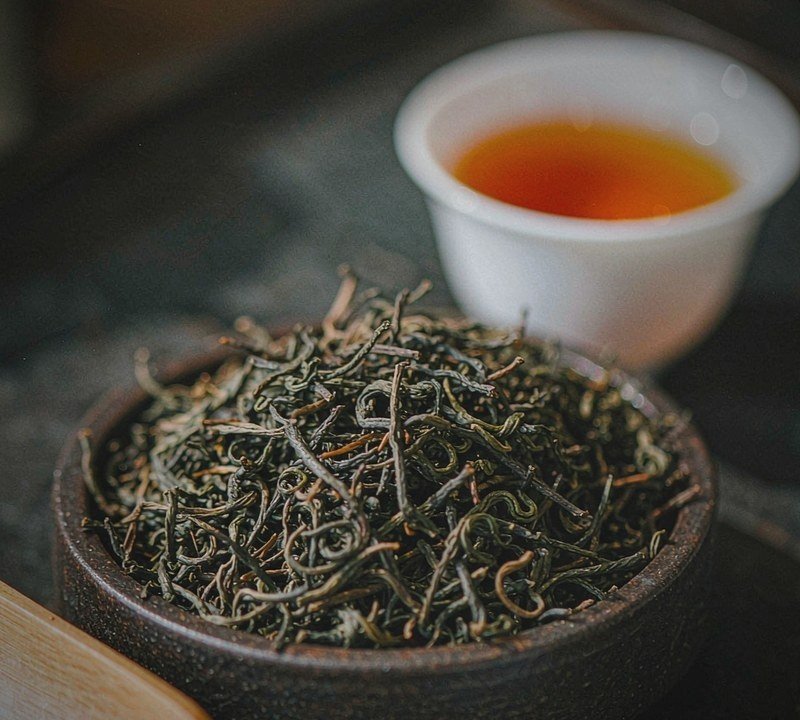
The commercial pattern is simple: lead your programme with Honey Orchid and Duck Shit for rotation, use Orchid for a mid-premium step-up, and reserve one or two rarer aromas for limited drops that generate press and repeat visits. The full origin and its signature styles are unpacked further in our Phoenix Mountain terroir guide.
How Dancong Is Made — and Where Quality Is Won or Lost
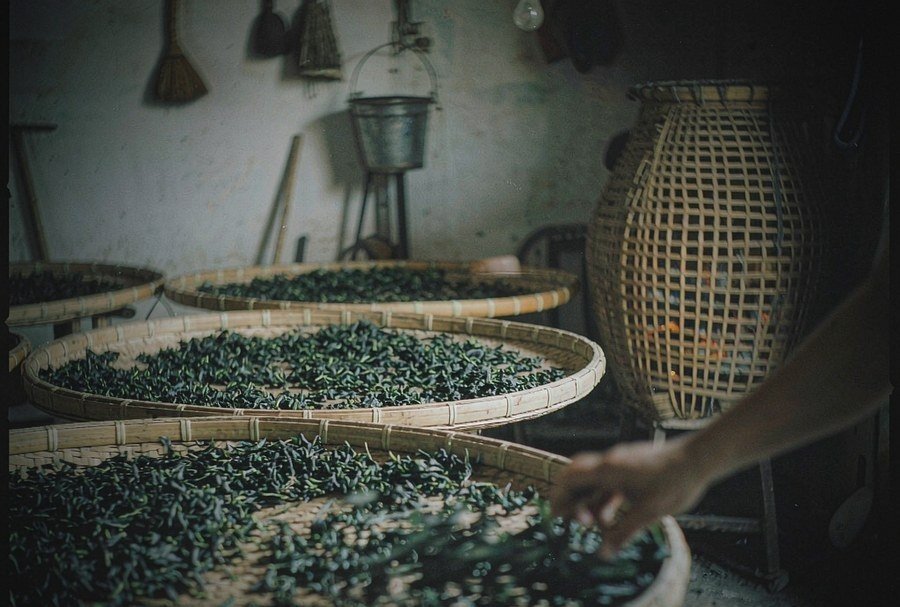
Dancong quality is decided in a handful of steps, and knowing them lets you ask better questions on a factory call. The initial processing follows a fixed sequence — sun withering, indoor withering, turn-over (“making the green”), kill-green, rolling, and drying — then finishing through sorting, blending by grade, and charcoal roasting to develop aroma.
Two stages move the needle most. The first is turn-over (zuo qing): the leaf is shaken and rested repeatedly — no fewer than four cycles under the GI method — which is where the floral aromatics form. Rush it and you get flat, green-smelling tea. The second is roasting. Light roasts keep varietal florals bright and are easier for a Western customer to read; traditional charcoal roasting builds a deeper, honeyed, fuller body with a “mountain rhyme” finish that commands attention among connoisseurs. Neither is better; they serve different shelves. A buyer who does not specify a roast level leaves the factory to ship whatever it needs to move.
Grading under the GI standard runs from special grade down through first, second and third grade on sensory criteria — aroma clarity, sweetness and回甘 (the returning sweetness), and a gold-to-brown-yellow liquor. Picking rules reinforce quality: leaf generally comes from bushes at least three years old, spring plucking closes around mid-May, and the leaf is ideally processed within hours of pick. When you request samples, ask which grade and roast the lot represents so comparisons are honest.
Confirming True Fenghuang Origin (and Dodging Fakes)
Because the name now sells, the category attracts mislabelling — leaf grown outside the protected area, or generic Phoenix Shui Xian stock from lower ground, presented as high-mountain Dancong at premium prices. For an importer, a fake origin is not just an honesty problem; it is a liability the moment a customer or a market regulator asks for proof. Treat verification as part of due diligence rather than something you trust a supplier to volunteer.
Practical checks are unglamorous and effective. Ask for the farm or primary-processing point inside the GI boundary, the harvest window (spring lots close around mid-May, autumn after mid-September), and lot-level records tying the shipment to those dates. Request third-party pesticide and contaminant testing against your destination’s limits, with the lab named rather than a generic “passes EU standards” claim. Then evaluate the tea itself: genuine high-elevation Dancong shows the layered floral aroma and the strong sweet return (the “mountain rhyme”) that low-land material imitates poorly, and it stands up across many short steeps. A vendor who is proud of the origin will not resist these questions — resistance is itself the signal.
Building that verification habit pays back on shelf. European buyers, in particular, increasingly expect origin documentation, and a GI-protected name carried honestly — with the China–EU status to back it — is a defensible claim a retailer can repeat. Documented provenance also shortens future negotiations: once a lot is verified, repeat orders ride on the record you already built instead of a fresh round of trust.
What Dancong Signals Are Worth in the Export Market
Premium oolong is a small, high-margin corner of a much larger trade, and the 2024 numbers make that clear. China exported about 374,100 tonnes of tea in 2024 — up slightly in volume but down in value to roughly $1.42 billion, as reported in China’s official 2024 tea trade figures via Xinhua — with green tea dominating and average prices sliding. Global tea exports fell to about $7.55 billion that year at an average near $3,783 per tonne, per Worldstopexports’ country-by-country tea export data.
Oolong itself tells the premium-oscillation story. China’s 2024 oolong export volume was about 15,500 tonnes, and per Firsd Tea’s 2024 China tea export review the average oolong price held in the mid-single-digits per kilogram — far above the $3.70/kg blend that defines bulk green, but volatile year to year. Guangdong’s share of oolong export value sits behind Fujian’s, which keeps genuine Fenghuang material a boutique, higher-priced origin rather than a commodity line.
| Metric (2024) | Figure | What it means for a buyer |
|---|---|---|
| China tea export volume | ~374,100 t (+1.79% YoY) | Supply is ample; negotiate from strength |
| China tea export value | ~$1.42 bn (–18% YoY) | Average prices fell; premium origin still holds |
| China oolong export volume | ~15,500 t | Oolong is a fraction of bulk green |
| Avg oolong export price | ~$6.4 /kg (blend level) | Authentic high-mountain single-bush sits far higher |
| Top oolong destinations | Japan, Malaysia, Thailand, Russia | Asia still absorbs most volume; the West is the margin play |
The takeaway for positioning is clear: you are not competing on bulk price here. You are selling a traceable, story-rich single origin into markets that pay for real difference — specialty retail, gifting and beverage programmes in the US and Europe, plus established oolong cultures in Japan and Southeast Asia. That single reframing changes every purchasing decision that follows below.
Grading, Pricing and Specifying Dancong on a Purchase Order
Pricing on Dancong is honest when a supplier quotes in bands tied to grade, aroma and elevation — and evasive when a single “premium” price covers everything. Rather than publish a fictional price list, work from structure. Ask each vendor to break quotes into (1) entry-grade commercial material for blends and food-service, (2) mid-grade single-aroma retail tea, and (3) high-mountain or old-bush reserve lots. Expect the gap between tier one and tier three to be wide, and expect genuine ancient-tree or top-altitude lots to behave like an auction market, not a commodity one.
Then put the specification in writing so sample and shipment match. A clean Dancong spec sheet names: the exact aroma type; roast level (light / medium / charcoal); harvest and season; grade under the GI tiers; elevation band; maximum moisture content; the pesticide and contaminant limits for your destination (EU MRLs and US import requirements differ); packaging format and inner-bag style; and a reference sample ID that both sides keep sealed. The more of that you control on paper, the less you are guessing when a container arrives.
Commercial terms round out the specification. Most buyers compare quotes on the same Incoterm — usually FOB from a Guangdong or Fujian port, or CIF to their own — so a like-for-like unit price is possible instead of an apples-to-oranges headline number. Agree the payment structure up front: a partial deposit against the order, with the balance released after an agreed pre-shipment inspection, keeps leverage on your side and makes the sealed reference sample the arbiter if the shipped lot drifts. For first orders, splitting the purchase across a smaller trial lot and an option on the main quantity lets you validate roasting consistency and shelf behaviour before committing to full volume. None of this is exotic trade craft — it is simply the paperwork that turns an attractive tasting sample into a predictable supply line.
Building a Dancong Programme: OEM, Samples and MOQ Reality
Most first-time Dancong buyers move in the same order: sample several aroma types and grades against each other, pick a lead SKU and one or two step-ups, then decide between buying finished leaf and running a private-label pack. If you already have roasting or packaging preferences, bring them early — factories standardise aroma at scale through controlled blending and roast profiles, and it is easier to design that in from the start than to bolt it on later.
Minimum order quantities reflect the artisanal nature of the origin. Single-aroma, single-harvest tea is made in lots, so small starting MOQs are realistic for entry grades, while reserve or old-bush material is often allocated in limited quantities simply because it exists in limited quantities. Plan cash flow accordingly: the compelling premium lot is frequently the one you cannot reorder in bulk, so treat high-end Dancong as a rotating capsule rather than a permanent shelf line. Browse the current Phoenix Dancong oolong wholesale range to see how aroma types and grades map onto real SKUs.
Watching an experienced brewer open up a Dancong makes the aroma-and-roast distinctions click faster than any spec sheet. This walkthrough from Mei Leaf on Dancong oolong is a useful, independent reference to share with your buyers or baristas:
Selling It Right: Brewing Guidance Your Customer Needs
A premium leaf with poor brewing guidance under-performs on the shelf and returns as a complaint. Dancong is forgiving once you know its rules, and a supplier that ships clear instructions protects both its reputation and your reorder rate. Pass these basics to your retail or HoReCa customers.
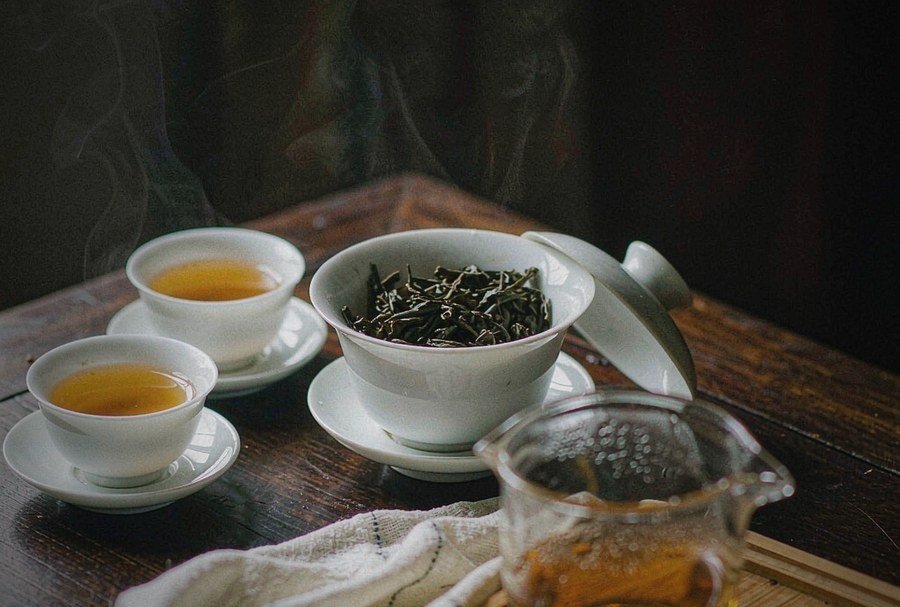
Use fully boiling water — around 100°C. Dancong’s aromatics need high heat to open, so gentle water flattens it. Brew gongfu style in a small gaiwan or clay pot at roughly 7–8 grams of leaf per 100–120 ml, rinse quickly, then steep short: start near 5–10 seconds and extend each infusion. A quality lot will give ten or more steeps, with the mid infusions typically the sweetest. For a simpler service format, 3 grams per 200 ml with a two-to-three-minute first steep works, adding around thirty seconds to each later steep. Store opened leaf airtight, away from light and strong odours; roasted lots in particular keep well for a year or more.
These numbers matter commercially because inconsistency is what drives returns. If you can standardise your own house spec — water temperature, ratio, timing — and put it on the pack, you convert a difficult-to-brew luxury tea into a reliable daily-drink product, which is exactly the behaviour that builds repeat orders for a wholesale line.
A Pre-Order Checklist for B2B Dancong Buyers
Before you commit a purchase order against any Fenghuang Dancong supplier, confirm each line below. If a vendor cannot satisfy them, that is not a Dancong problem — it is a supplier problem.
- Aroma type is named on the quote (Honey Orchid, Duck Shit, Orchid, etc.), not left generic.
- Roast level, harvest season and grade (GI tiers) are specified in writing.
- Elevation band or origin township is stated, and consistent with the price.
- A sealed reference sample ID matches the shipped lot, with moisture and QC limits agreed.
- Destination compliance is confirmed — EU MRLs or US import requirements — with test reports named.
- MOQ, lead time and packaging format are fixed, including how much of the lot can actually be reordered.
- The premium or reserve lots are understood as limited and non-repeatable, so you do not over-promise them downstream.
Dancong rewards buyers who treat it as a defined origin with real rules, not as a generic “Chinese oolong.” Get the aroma, grade and roast onto paper, buy against a sealed sample, and respect the altitude ladder in your pricing — and the same tea that reads as exotic on a Western shelf becomes a repeatable, margin-positive line for your brand. Start narrow with two aroma types, verify provenance before you scale, and let the tasting profile — not the marketing claim — decide which lots earn a permanent place in your range.