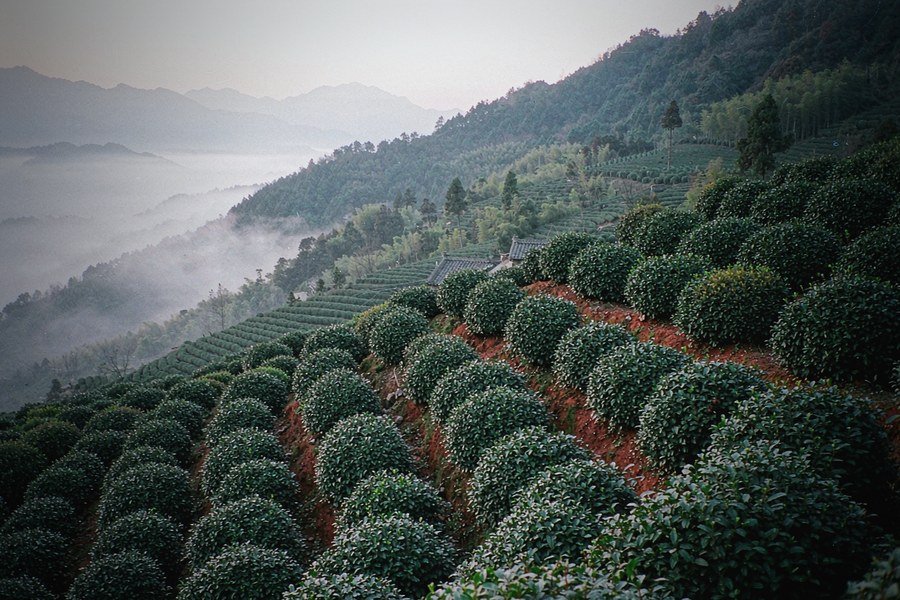

フェニックス山 — 単叢茶の産地
2026年10月15日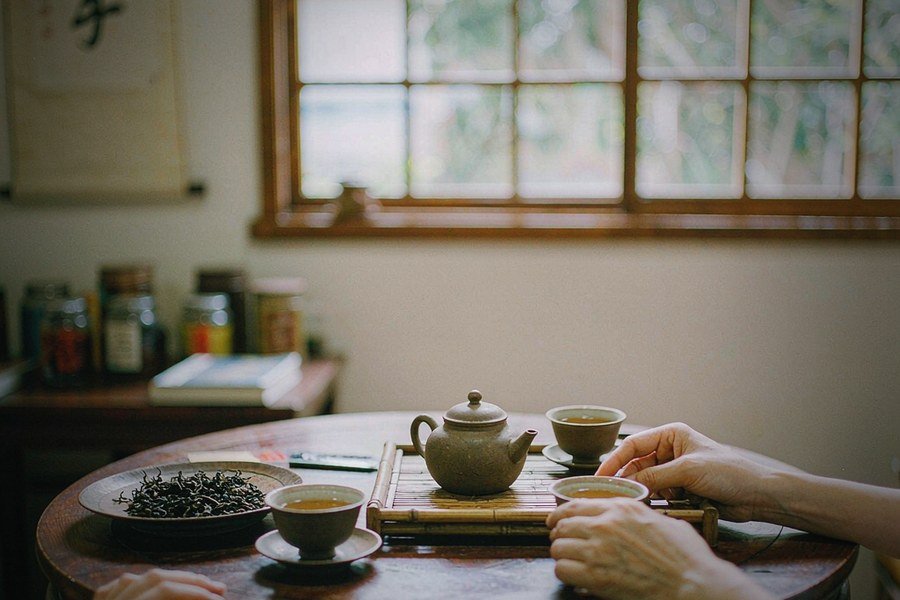
Ask someone in Chaozhou or Hangzhou what makes a good cup of tea and you rarely get an answer about flavour first. You get an answer about time — the time spent making it, and the fact that someone made it for you.
Chinese tea culture is less a set of rules than a habit of paying attention. The equipment is small. The cups are small. The point is that everything is done deliberately, and that the person across the table notices.
Tea Is a Way of Paying Attention
The classic formula for the spirit of Chinese tea is four words: harmony, quiet, enjoyment, truth. They describe a mood rather than a method. You can chase them with a full gongfu set on a carved tea table, or with a glass and a pinch of leaf at a kitchen counter, and the tradition is not offended either way.
What it does ask is that you do one thing at a time. Boil the water. Warm the vessel. Pour. Watch the colour change. Hand the cup to someone else.
The Six Families of Chinese Tea
Almost every Chinese tea is made from the same plant, Camellia sinensis, and classified by how the leaf is processed. The six families below cover the whole spectrum, from barely altered to deliberately aged.
| Family | Processing | Character | Examples |
|---|---|---|---|
| Green (绿茶) | Killed with heat, no oxidation | Fresh, grassy, green | Longjing, Biluochun |
| White (白茶) | Withered and dried only | Delicate, sweet, soft | Silver Needle, White Peony |
| Yellow (黄茶) | Wrapped and “sealed yellow” | Mellow, slightly nutty | Junshan Yinzhen |
| Oolong (青茶) | Partly oxidised, bruised and roasted | Aromatic, layered, complex | Phoenix Dancong, Tieguanyin |
| Black (红茶) | Fully oxidised | Rich, sweet, malty | Yunnan Black, Qimen |
| Dark (黑茶) | Fermented and aged | Deep, earthy, smooth | Pu-erh |
You can read more about how the varieties differ from the UK Tea & Infusions Association.
Small Cups, Full Attention: Gongfu Style
Gongfu means skill acquired through practice, and the gongfu approach to tea is exactly that: short infusions, small vessels, and a lot of them. Instead of steeping one large pot once, you brew the same leaf eight or ten times, drinking each round while it is still hot and still changing.
The practical result is that you taste a tea across its whole life. Infusion one is all top note; infusion four is all body; infusion seven is sweet water with a memory of the tea it came from. No single cup tells the story.
It also changes the pace of a conversation. A gongfu session cannot be rushed, because somebody has to pour.
Vessels That Grow With You
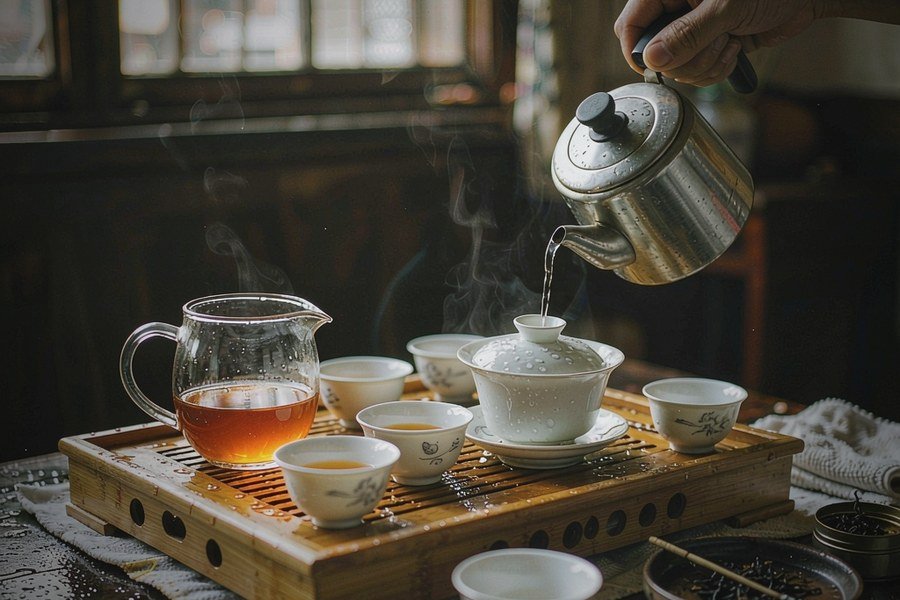
- Gaiwan. A lidded bowl. Cheap, neutral and honest — the best way to learn any tea, because it adds no flavour of its own.
- Yixing clay pot. Porous clay that absorbs the character of the teas brewed in it. Traditionally one pot is kept for one type of tea for years.
- Fairness pitcher (gong dao bei). Every infusion is poured into it first, then shared out. It guarantees that everyone at the table gets the same tea, and it stops the leaf from over-steeping.
- Small cups. Thirty to fifty millilitres. A small cup cools to drinking temperature in seconds and lets you smell the tea before you taste it.
- Tea pet. A small clay figure that sits on the table and gets soaked with hot water. Purely decorative. The tradition is honest about this.
The Social Side: Tea as Hospitality
In China, tea is the standard welcome. Guests are offered tea before anything else is discussed, and the first cup is a formality: a chance to sit down and settle before conversation starts.
Two habits are worth borrowing. First, when someone refills your cup, tap two fingers on the table — a small, silent thank you that lets the pouring continue without interrupting the conversation. Second, never let a guest’s cup sit empty. Refilling is the host’s job, and the guest’s job is to notice.
That instinct is not uniquely Chinese, of course. Tea arrived in Europe as a luxury, became a working-day habit in Britain, and went on to shape everything from the afternoon break to the design of the teapot. The history of tea and its social history are worth an afternoon on their own.
Which tea a culture reaches for says something about the climate it lives in. Roasted oolongs dominate the south of China, green teas the east, dark teas the southwest. The UK Tea & Infusions Association keeps a readable summary of the differences between them.
Less Tea, Better Tea
One difference between a Chinese tea table and a Western tea shelf is quantity. A Chinese household usually keeps two or three teas it drinks properly, rather than twenty it drinks casually. Better leaf, brewed with attention, works out cheaper per good cup than mediocre leaf brewed carelessly.
Start with one tea. Learn how it behaves at six infusions. Then buy the next one.
Reading a Chinese Tea Label
A few words on a packet will tell you most of what you need to know.
- Origin. A place name is a promise: Yunnan, Anxi, Wuyi, Phoenix Mountain. It should be specific enough to look up.
- Harvest. Ming qian means picked before Qingming in early April — the first and usually the best spring leaf.
- Aroma or cultivar name. On a Dancong label, this is the most useful line on the packet. It describes the tea, not the packaging.
- Roast level. Light roasts are floral and need drinking sooner; heavier roasts are deeper and keep longer.
- Weight and harvest year. Freshness matters for green and lightly roasted teas, less so for dark teas, which are meant to age.
Starting Your Own Table
You need less than you think: a gaiwan, a small pitcher, two cups and good water. Everything else can arrive later, and most of it is optional.
If you would like a starting point, our Phoenix Dancong range is a good first oolong, and our Chinese tea collection covers black, white and pu-erh as well. For a short, practical guide to the first tea you buy, start with how to brew Phoenix Dancong.
We are a Chinese tea company working with importers, retailers and tea houses abroad. If that is you, come and say hello.